
Pre-release information; the final game may differ. Based on the September 2026 demo and cited public material. We have not played this build; its exact build number is unconfirmed.
Three decisions, three different jobs
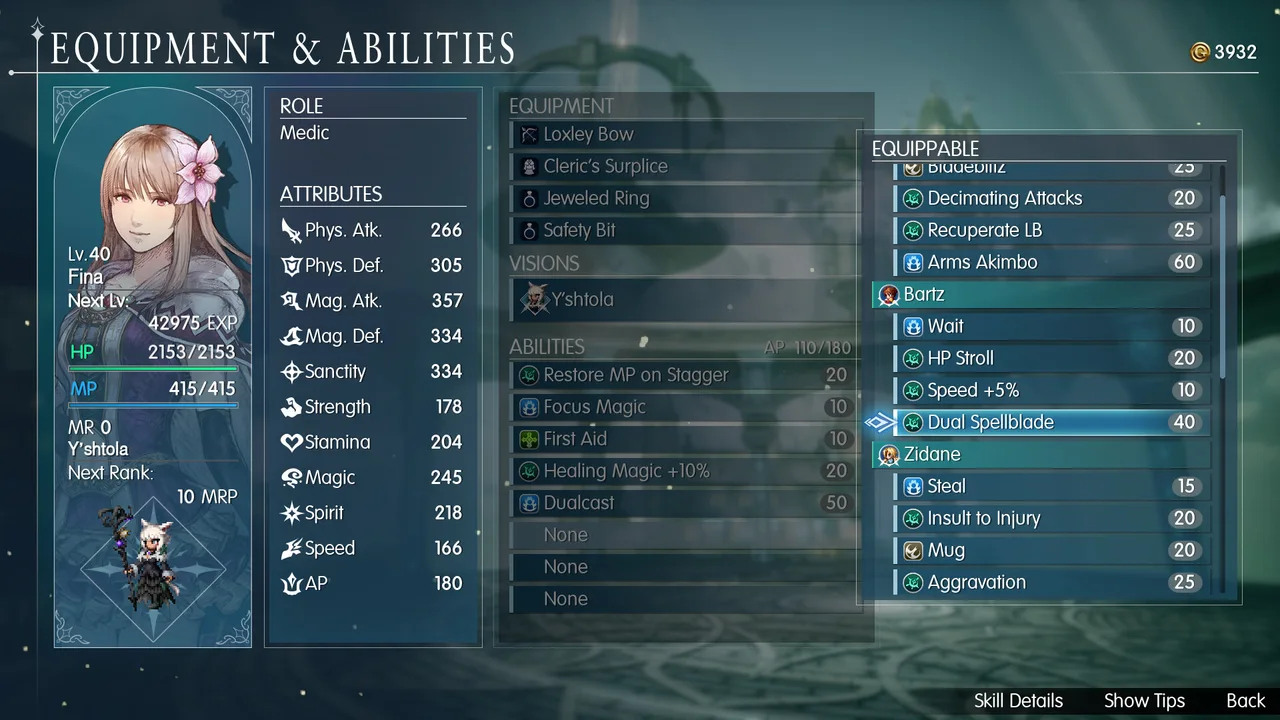
Official coverage describes Visions as equippable sources of abilities, with learned options that can be carried into other setups within a cost limit.[1] The demo-specific distinction between active skills, learned passives and permanent bonuses is documented in Fuzzfinger’s original screenshot guide.[2]
| You want to… | Check this system | Make this decision |
|---|---|---|
| Use a different set of attacks now | Equipped Vision | Choose the element or function missing from the current party. |
| Keep a useful learned benefit while changing setup | Character mastery and ability costs | Check what this character has learned and what fits in the available budget. |
| Expand the Vision’s available options | Awakening | Inspect the upgrade and its material cost before committing. |
Choose the next upgrade by the problem
For the early two-Vision setup, Game8 recommends Leah on Rain and Tronn on Lasswell. That gives you a concrete starting arrangement before adjusting for a particular encounter.[3]
If a boss weakness is uncovered: compare which available Vision supplies that element. An upgrade that unlocks an answer you need now is easier to justify than a small improvement to an attack the enemy resists.
If the party keeps falling behind on healing: reserve a recovery role before optimising damage. Matching character and Vision roles is one possibility; complementing a role can be more useful when the party has a missing function.
If a learned ability appears unavailable: check the current character, whether the ability is learned, whether it is equipped, and its cost. Do not assume that progress on one character was shared with everyone.
What changes when you switch Visions?
Fuzzfinger’s September demo guide distinguishes attacks supplied by the equipped Vision from learned passives that can be slotted within the ability budget. It also records permanent bonuses as character-specific. Awakening is a separate material-based progression step, reached through the moogle in Grandport.[2]
That creates a practical check: before swapping, write down the one action you need in the next fight. After swapping, inspect the menu again. If that action disappeared, restore the original equipment or choose an alternative you can actually use. A theoretical synergy is not helpful if one of its required actions is unavailable.
Focus on one Vision or rotate?
| Situation | Reasonable plan | Reconsider when… |
|---|---|---|
| You need a specific learned option | Train toward that visible reward first. | You have obtained it, or the next fight needs a different tool. |
| The current setup already clears encounters safely | Rotate to another useful, attainable benefit if you want broader options. | Changing equipment makes ordinary battles unreliable. |
| You have limited upgrade materials | Prioritise a clearly useful unlock over a distant endgame plan. | You can inspect a new, relevant upgrade in the demo. |
This is a decision framework, not a claim that one route maximises final-game stats. We have not verified endgame builds, a universal tier list or every Vision’s full unlock path. The MRP guide handles where to train; this page handles why to keep training a particular option.
Sources & verification
- PlayStation Blog (external site, opens a new tab)Square Enix, September 3, 2026: combat and Vision systems.
- Fuzzfinger Gaming (external site, opens a new tab)September 2026 demo guide with original screenshots; article displays September 13 and September 29 dates.
- Game8 (external site, opens a new tab)Japanese Chapter 1 screenshot walkthrough, checked October 20, 2026; route source, not our own playthrough.